
The Haryana government is launching an initiative to equip its employees with artificial intelligence (AI) skills through the iGOT Karmayogi platform, aiming to enhance governance and public service delivery.

The move comes amid growing demand from organisations in India for local access to Claude.

A three-day 'AI Champions for Digital Governance' programme has commenced in New Delhi, hosted by ITDC, SCOPE, and LBSNAA. The initiative aims to train senior leadership and operational teams in applying artificial intelligence within public sector organisations, aligning with the IndiaAI Mission. Experts highlighted AI's role in improving efficiency, productivity, and public service delivery, while also emphasising responsible adoption and data quality. The programme seeks to build an AI-ready nation and contribute to India's vision of future-ready governance systems.
A three-day 'AI Champions for Digital Governance' programme has commenced in New Delhi, hosted by ITDC, SCOPE, and LBSNAA. The initiative aims to train senior leadership and operational teams in applying artificial intelligence within public sector organisations, aligning with the IndiaAI Mission. Experts highlighted AI's role in improving efficiency, productivity, and public service delivery, while also emphasising responsible adoption and data quality. The programme seeks to build an AI-ready nation and contribute to India's vision of future-ready governance systems.

Karnataka Chief Minister D K Shivakumar met with AI major Anthropic to discuss a long-term partnership aimed at accelerating AI adoption across governance, education, healthcare, research, and the state's startup ecosystem. The collaboration focuses on deploying AI solutions responsibly, ensuring data privacy, and developing AI-focused skilling programmes and an AI University.

Generative artificial intelligence (AI) is beginning to alter hiring patterns in South Asia, with multinational companies (MNCs) and firms integrated into global value chains (GVCs) reducing recruitment more sharply than domestic firms, signalling the technology's early impact on the region's export-oriented services sector, according to the World Bank's World Development Report 2026.
The World Bank's "World Development Report 2026" urges developing countries to adopt low-cost AI tools to accelerate progress in healthcare, education, and judicial services. The report highlights AI's potential to boost productivity and improve public services, while noting that jobs in high-income countries are more at risk from automation than those in developing nations.

'Applying AI to change the lives of Indians and at population scale -- just like we did with DPI [digital public infrastructure] -- is really where it's going to go.'
Tata Consultancy Services has partnered with French artificial intelligence firm Mistral to provide frontier grade AI solution, Mistral Forge, for enterprises across the world.

RBI Deputy Governor Rohit Jain discussed the future of India's foreign exchange markets, highlighting the increasing role of local currencies in cross-border trade, the impact of technology, and existing challenges. He emphasised the need for market evolution to facilitate India's global engagement, absorb shocks, and serve all users efficiently. Jain also addressed concerns about unauthorised forex trading platforms and the importance of customer awareness.

Uttar Pradesh authorities have implemented extensive security and logistical measures for the annual Kanwar Yatra, which began on Thursday and concludes on August 11. These include AI-enabled surveillance, additional security personnel, medical camps, dedicated control rooms, and traffic diversions, all aimed at ensuring a "zero incidents and zero accidents" pilgrimage for lakhs of devotees.

Prime Minister Narendra Modi has outlined a comprehensive plan to empower India's youth, including training one crore youngsters in artificial intelligence skills and providing free online coaching for competitive examinations, aiming to position them at the forefront of the nation's journey to become a developed nation by 2047.

India is adopting a two-pronged strategy for artificial intelligence development, focusing on open-source models and indigenous innovation to counter global access restrictions on advanced AI technologies. The government aims to support local developers and ensure AI creates tangible economic impact across various sectors, rather than being solely driven by market speculation.
Senior Indian officials highlight the indispensable role of the private sector in translating India-US cooperation in AI, semiconductors, quantum technologies, and critical minerals into tangible outcomes. The collaboration aims to build trusted, resilient technology ecosystems and position India as a global electronics and semiconductor hub.
The government's e-marketplace platform, GeM, is significantly enhancing public procurement through the integration of AI, advanced analytics, and digital monitoring systems. This strategic adoption has led to substantial savings for the exchequer and improved transparency, while also playing a crucial role in health sector procurement.

NITI Aayog member Abhay Karandikar stated that the US government's new export controls, which led AI giant Anthropic to take its latest models offline, underscore the critical need for India to achieve self-reliance in technology development, particularly in AI infrastructure and hardware.

A new report by FICCI, BCG, and IBA outlines that India's banking sector must grow significantly faster than nominal GDP to support a USD 30 trillion economy by 2047, requiring banking assets of USD 45 trillion. The report highlights the sector's current strength, challenges in digitisation, and the need to enhance resilience against fraud and cyber threats, proposing a 13-point agenda for stakeholders.

Tata Consultancy Services (TCS) has announced a global partnership with AI major Anthropic to help enterprises accelerate their adoption of artificial intelligence, including equipping 50,000 TCS employees with Anthropic's Claude AI models.

Dell Technologies is significantly expanding its domestic manufacturing in India, with a majority of its servers now produced locally, driven by data sovereignty and AI adoption. The company also launched new AI infrastructure solutions, including PowerStore Elite, designed for secure on-premises data management and AI workflows, while asserting that AI creates more jobs.
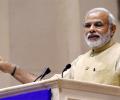
Prime Minister Narendra Modi, in his Independence Day address, highlighted technology and innovation as central to India's goal of becoming a developed nation by 2047. He called for India to lead in emerging technologies like AI, quantum computing, and space, announcing a massive AI skilling initiative for one crore youth. Modi stressed the importance of becoming a global innovation hub, bolstering energy security with nuclear power, and strengthening cybersecurity.

Jammu and Kashmir LG Manoj Sinha emphasised the critical need to translate scientific immunological knowledge into public health action. Speaking at the IMMUNOCON-2026 conference, he highlighted immunology's evolving role in healthcare, stressing continuous innovation and collaboration in areas like immuno-AI fusion, climate immunity, and translational medicine to combat infectious diseases and prepare for future global health threats.
Jammu and Kashmir LG Manoj Sinha addressed the 'IMMUNOCON-2026' conference, stressing the importance of translating scientific immunological knowledge into public health action. He urged scientists to focus on precision medicine, immuno-AI fusion, climate immunity, and accelerating translational research to combat infectious diseases and enhance healthcare delivery.
State Bank of India (SBI) is extensively using artificial intelligence to underwrite nearly Rs 1 lakh crore in MSME loans and automate the processing of cheques up to Rs 10,000. This AI adoption aims to enhance efficiency, free up employee bandwidth, and improve customer service across various banking functions.
ServiceNow Vice Chairman Nick Tzitzon highlights India's potential to develop an AI-native government model, emphasising enhanced public services, data privacy, and economic growth.

While opening new accounts, banks can check if the name appears in any mule data. In case it does, the bank can conduct enhanced due diligence.
Noted scientist Prof V Ramgopal Rao highlights India's significant progress in higher education and research but points out a critical gap in converting scientific discoveries into market-ready technologies. He advocates for a robust institutional framework, multidisciplinary collaboration, and stronger academia-industry ties to foster innovation and translate research into practical products.
China has deployed 72 "robot employees" across Beijing's municipal parks to perform various tasks like cleaning, patrolling, guiding visitors, and pest control. This initiative is part of China's "Robot Plus" strategy, driven by an ageing population and labour shortages, and showcases the growing domestic service robot market. These AI-powered robots enhance efficiency and visitor experience in popular attractions like the Summer Palace and Zizhuyuan Park.

An innovation roadmap, a mechanism to double annual bilateral trade within next five years, and a joint artificial intelligence framework were among 13 outcomes to emerge from wide-ranging talks between Prime Minister Narendra Modi and President Emmanuel Macron on Sunday.

Finance Minister Nirmala Sitharaman met with bank heads to discuss risks related to Artificial Intelligence (AI) following global concerns over Anthropic's Mythos model and its potential threat to financial systems' data security.

Investors should do thorough due diligence when selecting a platform.

The Rajya Sabha has passed The Bankers' Books Evidence Bill, 2026, which aims to replace a British-era law and allow digital and virtual records to be admissible as evidence in courts. This legislation aligns with contemporary digital banking practices and extends a uniform evidential framework to various financial entities, including NBFCs and fintech companies. Finance Minister Nirmala Sitharaman highlighted the bill's role in strengthening public confidence and safeguarding customer privacy. The bill's passage, however, saw an Opposition walkout over unrelated issues.

Finance Minister Nirmala Sitharaman met with bank heads to discuss the risks associated with Artificial Intelligence (AI) following global concerns about Anthropic's Mythos model and its potential threat to financial systems' data security.
Union Health Minister J P Nadda has emphasised the need for sound regulation, ethical oversight, and equity in the application of Artificial Intelligence (AI) to healthcare, speaking at the World Health Assembly in Geneva.
The National Medical Commission is emphasising the importance of preparing doctors and healthcare systems for the responsible and effective use of artificial intelligence, highlighting the need for ethical and equitable AI adoption in healthcare.
China has cancelled drone shows and suspended drone flights across several provinces following a small plane crash in Beijing that raised significant security concerns, especially near top leadership compounds. This move signals a tightening of low-altitude aviation regulations, impacting the burgeoning "low-altitude economy" and civilian drone use, with new laws classifying illegal drone use as a public security threat.
The Delhi Lawn Tennis Association (DLTA) has strongly denied reports of violating land lease conditions for the R K Khanna Tennis Complex, asserting that all facilities comply with government norms. The association suggested that the allegations are "mala fide" and strategically timed to influence the upcoming All India Tennis Association (AITA) elections. DLTA also defended its commercial subletting practices, stating they are approved by the L&DO and are essential for generating revenue as it receives no government funding for maintenance.
A new study analysing millions of posts from underground cybercrime forums reveals that cybercriminals are struggling to effectively utilise AI tools, despite widespread experimentation since the launch of ChatGPT.

Finance Minister Nirmala Sitharaman convened a high-level meeting with bank heads to assess cybersecurity risks linked to advanced AI models, following concerns over Anthropic's Claude Mythos system and its potential impact on financial data security.
FICCI FLO and UP BJP MLA Rajeshwar Singh are collaborating to train 100 women as 'drone pilots' in Lucknow. This initiative aims to provide employment and entrepreneurship opportunities in the burgeoning drone economy. The announcement was made at an event where MLA Singh also highlighted his efforts in public grievance redressal and establishing women's empowerment centres in his constituency.

Prime Minister Narendra Modi has introduced a 'Sapta Dhara' (seven-stream) reform framework, aiming to propel India into a developed nation by 2047. This comprehensive plan focuses on key sectors including manufacturing, agro-food processing, technology, logistics, defence, green and blue economy, and soft power, leveraging the nation's youth potential.
